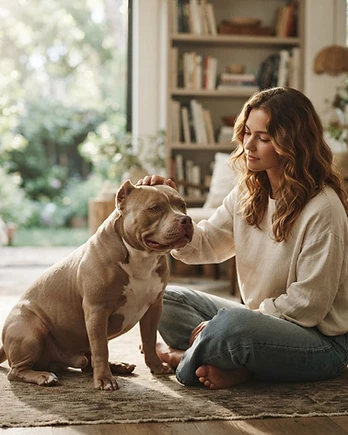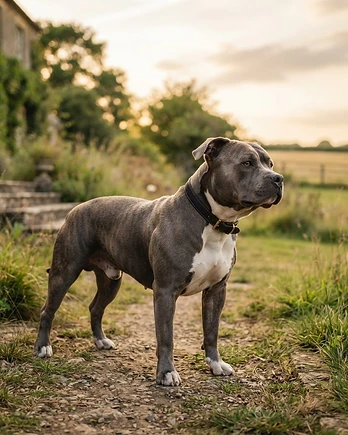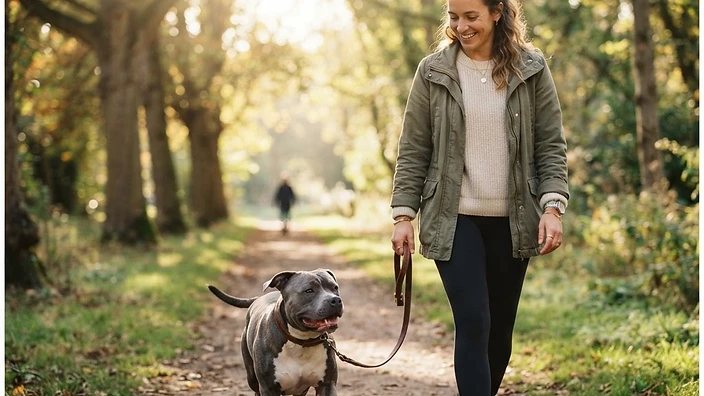
There is something deeply satisfying about watching an American Bully move — that confident, rolling stride, the low-slung power, the unmistakable pride in how they carry themselves. These dogs were built to impress, and somewhere along the way a myth took hold: that a muscular, athletic-looking breed must need hours of intense daily exercise. The reality is far more nuanced, and frankly, far more important than most new owners realize.
At Monolith of Tenderness, we have raised ABKC- and UKC-registered American Bullies in Austin, Texas for years. One of the most consistent conversations we have with families bringing home a new puppy is about exercise — how much is enough, how much is too much, and why those first eighteen months are so critical. The answers often surprise people, and we think every American Bully owner deserves to understand the science and the love behind getting it right.
This guide is our honest, experience-backed answer to those questions. Whether you are preparing to welcome one of our available American Bully puppies or are already navigating life with a young Bully, what follows will help you keep your dog healthy, happy, and moving beautifully for years to come.
Why Exercise Rules Are Different for American Bullies
American Bullies are a moderate-energy breed. They are not Border Collies burning through mental calculations all day, and they are not Huskies wired to run twenty miles. They are affectionate, adaptable, people-focused dogs who enjoy bursts of activity followed by long, contented rest — preferably next to you on the couch.
But the breed's compact, heavily muscled build and relatively short legs create a specific biomechanical reality: their joints, particularly hips, elbows, and knees, carry a significant load. Add the genetic predispositions that come with any selectively bred dog, and it becomes clear that exercise is not just about burning calories — it is a form of ongoing joint management. You can read more about how we prioritize structural health in our dogs in American Bully Health Testing: Why It Matters for Your Puppy.
The Growth Plate Problem
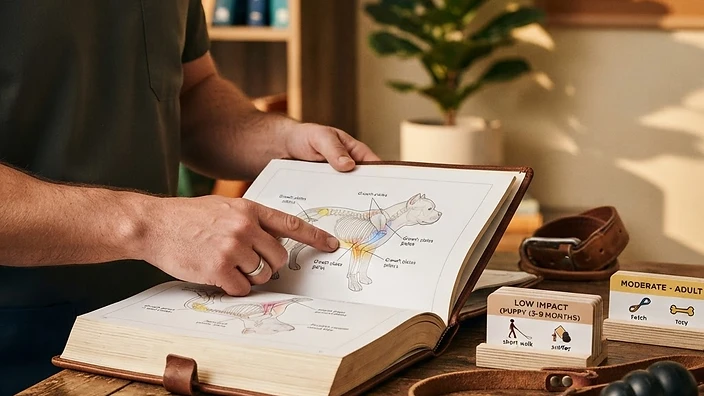
This is the single most important concept for any American Bully puppy owner to understand. Growth plates — also called physes — are soft areas of developing cartilage near the ends of your puppy's long bones. During the growth phase, they are the mechanism by which bones lengthen and shape themselves. They are also fragile.
Repetitive high-impact stress on open growth plates can cause microfractures, uneven bone development, and early-onset joint disease. In American Bullies, growth plates typically close somewhere between 12 and 18 months of age, depending on the individual dog and their lineage. Until those plates are closed — confirmed ideally by a veterinary X-ray — high-impact or high-repetition exercise carries real risk.
Common mistakes that damage developing joints include:
- Jogging or running your puppy on hard surfaces like asphalt or concrete
- Allowing repeated jumping on and off furniture, steps, or platforms
- Forced fetch sessions involving sudden stops and sharp turns
- Puppy play that goes on for hours without rest
- Premature weight-pulling or resistance training
None of this means your puppy should live in a bubble. It means you are their advocate, and you make choices that protect their future.

A young American Bully puppy rests calmly on soft grass after a brief, age-appropriate play session. The image illustrates the importance of limiting exercise duration and allowing recovery time to protect developing growth plates.
Exercise by Age: A Stage-by-Stage Guide
8 to 12 Weeks: Gentle Exploration Only
Newly homed puppies are overwhelmed by sensory input. Everything is new — your floors, your yard, the smell of other animals, the sound of the street. Exercise at this stage is not structured; it is simply supervised exploration.
Allow your puppy to move freely in a safe, enclosed area. Short play sessions of 10 to 15 minutes, two or three times a day, are plenty. No stairs if possible. No jumping. No long walks. These babies need sleep — up to 18 hours a day — because sleep is when growth hormones are released and bones develop properly.
If you have just brought home a puppy like Atlas — our Lilac Tri-Color Male or Ella — our Lilac Tri Female, this is the phase to focus on bonding, environment introduction, and gentle handling — not fitness.
3 to 6 Months: The 5-Minute Rule
The veterinary community widely recommends the "5-minute rule" for puppies: five minutes of structured exercise per month of age, up to twice daily. A four-month-old puppy, for example, should have no more than 20 minutes of intentional exercise per session.
At this stage, leash walks on soft surfaces — grass, dirt, mulch — are ideal. Let your puppy set the pace and stop frequently to sniff. Mental engagement during these walks is just as tiring as physical movement. Continue discouraging jumping, and be mindful of play with older, larger dogs who may inadvertently bowl your puppy over.
Safe activities at this stage:
- Short leash walks on grass or soft ground
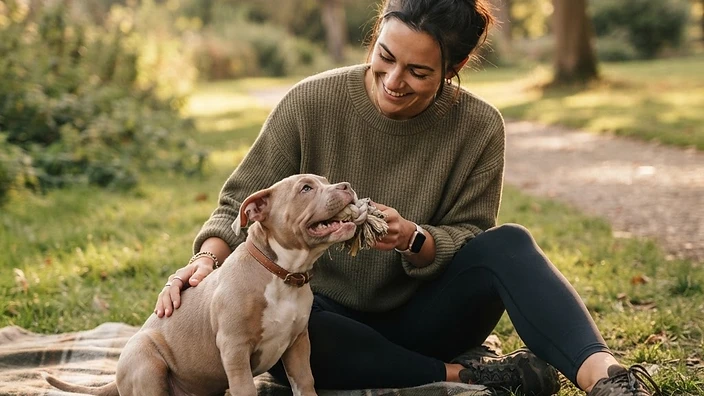
- Gentle tug games (brief and low-intensity)
- Sniff-based enrichment in the yard
- Basic obedience training sessions (mental exercise is exercise)
6 to 12 Months: Gradual Expansion
By six months your American Bully puppy is starting to look and feel more like a dog — but their skeleton is still under construction. You can begin to gradually increase walk duration and introduce more varied terrain, but avoid anything that involves sustained impact.
This is a great time to focus on building leash manners, socialization with other dogs in controlled settings, and confidence through new environments. Swimming, if your dog enjoys it, is excellent at this stage — it builds muscle without joint impact.
Puppies like Bowie — our Blue Tri Male, Diesel — our Chocolate Tri Male, and Hazel — our Merle Female are entering this phase with strong foundations — and the families who welcome them home can continue that foundation by respecting the gradual build.
Avoid until at least 12 months:
- Running on pavement or concrete
- Repetitive ball chasing with sharp stops
- Jumping from elevated surfaces
- Any form of weight or resistance training
12 to 18 Months: Approaching Maturity
Between 12 and 18 months, most American Bullies are reaching structural maturity, though some lines mature more slowly. This is the time to have your vet assess joint development and, if appropriate, begin introducing more demanding activities gradually.
Even at this stage, build up slowly. If you want to start jogging with your Bully, begin with walk-jog intervals on grass or packed earth before transitioning to harder surfaces. Give your dog rest days. Watch for signs of soreness — reluctance to rise, subtle limping, stiffness after sleep.

A muscular adult American Bully splashes through water during a supervised swimming session, showcasing a low-impact activity that supports cardiovascular fitness and muscle development while protecting the hips, elbows, and knees.
18 Months and Beyond: The Fit Adult Bully
A fully mature American Bully is genuinely capable of sustained activity and can enjoy a wide range of physical outlets. Daily exercise for an adult Bully should typically total 45 to 60 minutes, which can be split across two sessions. They are not built for endurance, but they thrive with consistent, moderate activity.
Great activities for adult American Bullies:
- Brisk daily walks (30 to 45 minutes)
- Hiking on trails with natural terrain
- Structured play sessions with other dogs
- Swimming — excellent for muscle building and joint health
- Flirt pole or tug sessions (10 to 15 minutes of focused engagement)
- Canine fitness exercises (balance discs, cavaletti poles, etc.)
- Nosework and scent games for mental enrichment
One important consideration for Austin families specifically: heat. American Bullies, like all brachycephalic-influenced breeds, can struggle in extreme temperatures. Exercise early in the morning or after sunset during Texas summers, always carry water, and monitor your dog closely for overheating.
Recognizing Over-Exercise vs. Under-Exercise
Both extremes hurt. An under-exercised American Bully becomes bored, frustrated, and may develop destructive behaviors or obesity. An over-exercised one — particularly as a puppy — risks joint damage, fatigue, and a diminished quality of life later.
Signs your Bully may be getting too much exercise:
- Excessive panting that continues long after activity ends
- Reluctance to engage in activities they normally enjoy
- Limping or favoring a leg during or after exercise
- Sleeping far more than usual
- Swollen or warm joints
Signs your Bully may need more activity:
- Restlessness or inability to settle
- Destructive chewing or digging
- Pulling hard on the leash from frustration
- Weight gain
- Attention-seeking behaviors escalating
If you notice either pattern, start with a conversation with your veterinarian. And remember that mental exercise counts — puzzle feeders, training sessions, and enrichment activities can satisfy a working dog's brain without stressing joints.
Building a Balanced Routine: Key Takeaways
- Puppies under 12 months need protected, limited exercise — not more, not less
- Growth plates close between 12–18 months; confirm with a vet X-ray before high-impact activities
- Use the 5-minute rule (5 min per month of age, twice daily) for structured exercise before 6 months
- Soft surfaces are always preferable to hard pavement for growing and adult Bullies alike
- Swimming is a gold-standard low-impact activity for all ages after vaccinations are complete
- Mental enrichment — training, sniff work, puzzle feeders — counts and matters
- Heat is a serious risk in Austin; schedule activity for cooler parts of the day
- Rest is not laziness — adequate sleep is critical for puppy development and adult recovery
- Watch your dog, not just the clock; individual dogs vary, and yours will tell you what they need
Nutrition and Exercise: They Work Together
No exercise program exists in isolation. What your American Bully eats directly affects their energy levels, muscle development, and joint health. A diet rich in appropriate protein, omega-3 fatty acids, and joint-supportive nutrients like glucosamine is a natural complement to a thoughtful exercise routine. Our Feeding Your American Bully: A Nutrition Guide goes into detail on this, and we encourage every new owner to read it alongside this article.
We also recommend reading Bringing Your American Bully Puppy Home: The First 48 Hours before your puppy arrives — the first days set the tone for everything that follows, including how you begin to build activity into your routine.
You Are Their Greatest Advocate
One of the things we love most about families who come to Monolith of Tenderness is that they ask questions like these. The fact that you are reading this means you are already thinking about your dog's future — not just their first weeks home, but the decade-plus of life you are going to share.
American Bullies are extraordinary dogs. Are American Bullies Good Family Dogs? Absolutely. Here's Why — because they are loyal, gentle, adaptable, and deeply bonded to their people. The greatest gift you can give them is a healthy body to grow old in, and that starts with the choices you make in year one.
We put everything we know into every puppy we breed — the health testing, the structure, the temperament. You can learn more about our approach on our about our breeding program page, and explore everything we offer new families in our full resource library.
When you are ready to find your Bully, we would love to introduce you. Browse our available American Bully puppies and when a face catches your heart, contact us — we will walk you through every step of the journey together.